

If you’ve spent any time in developer circles lately, you’ve noticed the conversation has shifted. It’s no longer “which AI model is smartest.” It’s “which AI coding agent actually gets work done.” The models have converged in raw intelligence, so the harness wrapped around them, how it edits files, runs commands, and handles your codebase is what separates a tool you love from one you abandon after a week.
Three names keep coming up: OpenCode, Cursor, and Claude Code. Each represents a completely different philosophy on how AI should fit into your workflow, and picking the wrong one can cost you real money and real time. Here’s an honest, practical breakdown of all three.
Quick Answer
If you want the short version: Cursor is the best full-IDE experience for developers who like working in a visual editor. Claude Code is the strongest choice for code quality and deep reasoning, especially for complex, multi-file work. OpenCode is the best option if you want a free, open-source, model-agnostic agent that doesn’t lock you into one provider.
Now let’s get into why.
What Is OpenCode?
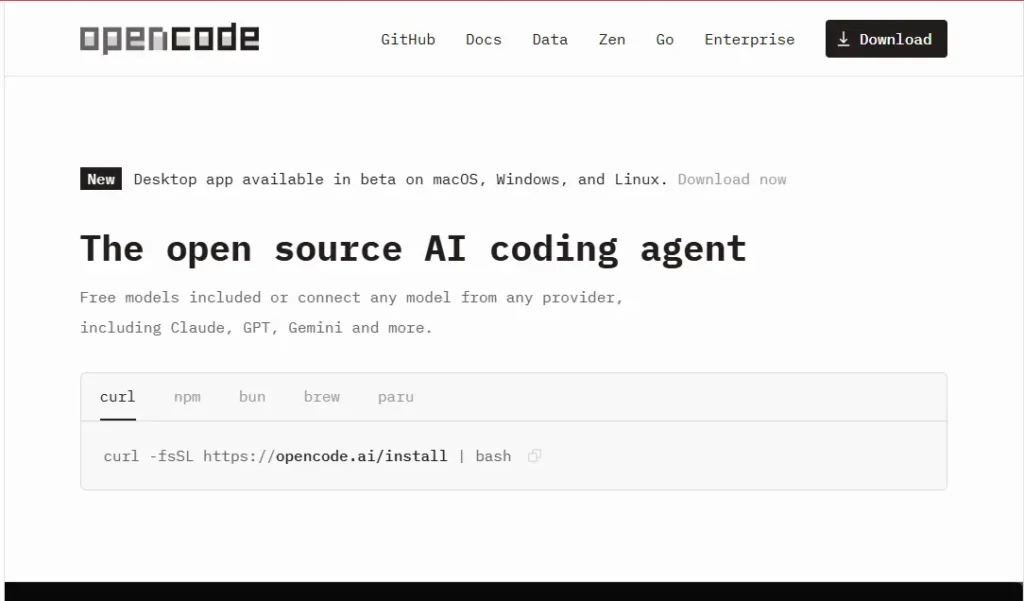
OpenCode is an open-source, terminal-native coding agent built by Anomaly (formerly known as SST). It has become the breakout story of 2026, now sitting at over 170,000 GitHub stars and more than 1.6 million weekly npm downloads, putting it ahead of Claude Code, Gemini CLI, and OpenAI Codex in open-source adoption.
What makes OpenCode different is that it doesn’t tie you to a single AI provider. You can point it at Claude, GPT, Gemini, DeepSeek, or a locally hosted model, and it works the same way regardless. It also runs in fully air-gapped environments, which matters a lot for regulated industries like legal, healthcare, or finance, relevant if you’re building tools for sensitive client work.
OpenCode is genuinely free if you bring your own API key. For people who don’t want to manage separate provider accounts, the team also launched two paid layers: Go, a budget $10/month plan giving access to a rotating set of open-source models, and Zen, a pay-as-you-go option with curated, benchmarked models and no markup on requests.
Best for: developers who want full control of their stack, hate vendor lock-in, or need to self-host for compliance reasons.
Watch out for: since OpenCode is model-agnostic, your output quality depends entirely on which model you connect it to. A great harness with a weak model still produces weak code.
What Is Cursor?
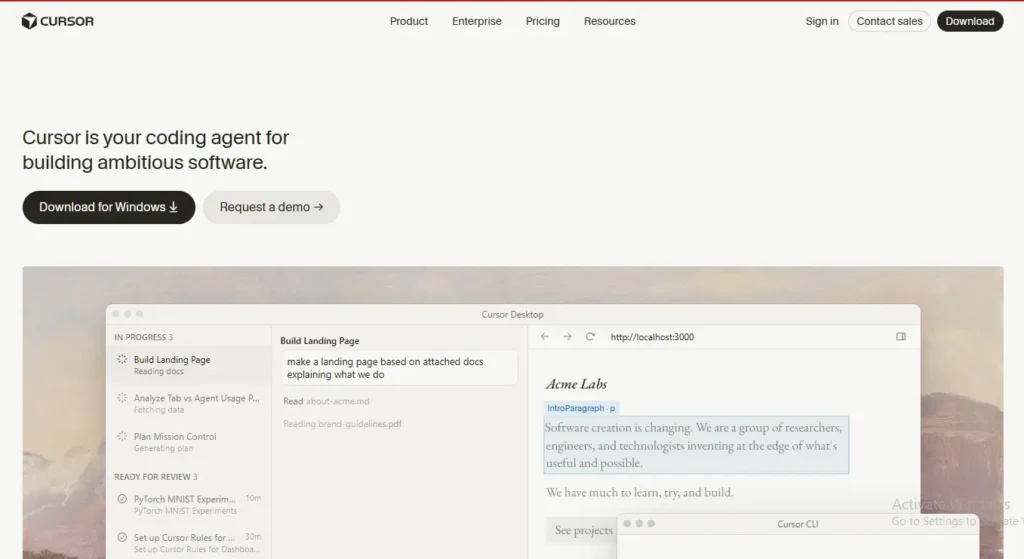
Cursor is the most developer-loved full IDE with AI built directly into the editing experience, rather than bolted on as a sidebar. Its Composer 2 feature and growing plugin marketplace have made it the go-to choice for developers who want AI assistance without leaving their normal coding environment.
Cursor blends multiple frontier models, Claude, GPT, and Gemini, alongside its own in-house Composer model, letting you choose the right model for the task at hand instead of being stuck with one vendor’s capabilities.
Pricing runs free for light use, with Pro starting around $20/month. Notably, Cursor has also become a major business story this year: the company signed an agreement giving a separate investor group rights to acquire it for a reported $60 billion, a sign of how seriously the market now takes AI coding tools as core infrastructure, not side projects.
Best for: developers who want a visual, full-featured IDE experience with AI woven into every part of it, rather than a terminal-only workflow.
Watch out for: Cursor’s flexibility comes at a cost. Power users burn through Pro limits quickly, and the constant model-switching can make output quality less predictable than a tool locked to one well-tuned model.
What Is Claude Code?
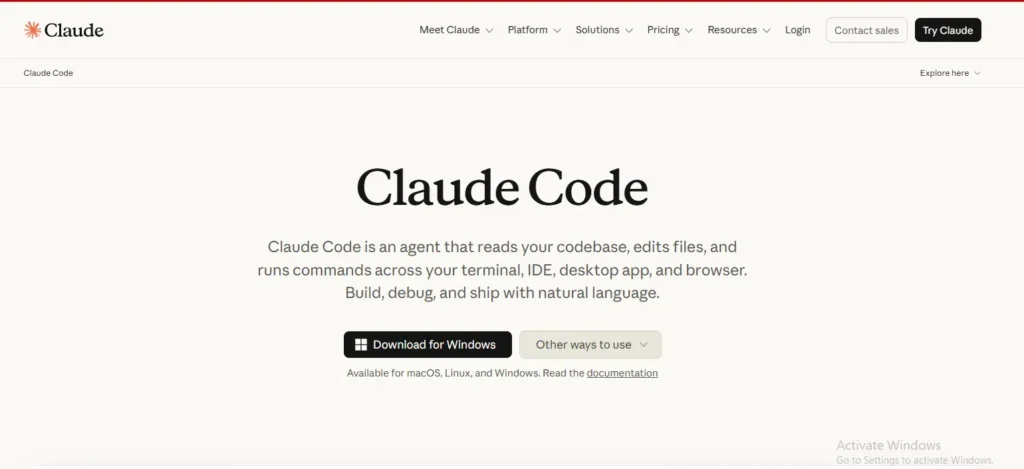
Claude Code is Anthropic’s terminal-native coding agent, also available inside VS Code, JetBrains, a desktop app, and the browser. Unlike OpenCode and Cursor, it’s purpose-built around Claude’s models specifically, and that focus shows up in the results.
In blind code-quality reviews, Claude Code’s output is preferred roughly two-thirds of the time over competing tools. On Terminal-Bench, a benchmark measuring real agentic coding performance, Claude Code paired with Claude’s top model remains one of the strongest usable combinations available, particularly for tasks requiring deep reasoning, careful refactoring across multiple files, or subtle architectural decisions, the kind of work that trips up less specialized agents.
Claude Code also added Routines, letting you schedule recurring agent tasks triggered by cron jobs or GitHub events, which is a meaningful step toward agents that work in the background rather than only when you’re actively prompting them.
Best for: teams and individual developers who prioritize code quality and reasoning depth over raw speed or flexibility, especially on complex codebases.
Watch out for: because Claude Code is tightly coupled to Claude’s models, you don’t get the multi-provider flexibility that OpenCode and Cursor offer. You’re paying for quality, not optionality.
OpenCode vs Cursor vs Claude Code: Side-by-Side
| Factor | OpenCode | Cursor | Claude Code |
|---|---|---|---|
| Interface | Terminal-native | Full IDE | Terminal, IDE, desktop, web |
| Model flexibility | Any provider (BYOK) | Multiple frontier models + in-house | Claude models only |
| Cost | Free (BYOK), or $10–20/mo bundled | Free tier, Pro ~$20/mo | Usage-based, bundled with Claude plans |
| Best strength | No vendor lock-in, self-hostable | Visual IDE experience | Code quality and reasoning depth |
| Best for | Power users, privacy-sensitive teams | Developers who want a familiar editor feel | Complex, high-stakes codebases |
| Open source | Yes (MIT license) | No | No |
How to Choose
Ask yourself three questions before picking one.
Do you want to stay in a visual editor, or are you comfortable in the terminal? If you live in an IDE and want AI woven into that experience without changing your habits, Cursor is the more natural fit. If you’re comfortable working from the command line, both OpenCode and Claude Code will feel more efficient.
Does vendor lock-in matter to you? If you want the freedom to switch models depending on cost or task, or you’re working with sensitive client data that needs to stay off third-party servers, OpenCode’s flexibility and self-hosting options are hard to beat.
Is code quality on hard problems your top priority? If you’re working on complex, multi-file refactors or architecturally tricky code where mistakes are expensive, Claude Code’s reasoning depth tends to win out, even if it costs more and offers less flexibility.
Many experienced developers don’t pick just one. A common pattern in 2026 is running OpenCode (or a budget model subscription like Go) for routine, low-stakes work, and reaching for Claude Code when the task actually requires careful thinking. Cursor fits in well if your team’s workflow is editor-centric and you want one consistent place for everything.
The Bottom Line
There’s no single “best” AI coding agent in 2026, there’s a best agent for your specific workflow. OpenCode wins on flexibility and cost control. Cursor wins on a polished, all-in-one editor experience. Claude Code wins when the quality of the output matters more than anything else. The smartest move isn’t picking a side, it’s matching the tool to the task in front of you.
This comparison reflects pricing, benchmarks, and feature sets as of late June 2026. AI coding tools move fast, so check current pricing pages before committing to a paid plan.